RDK
HyMesh®TECH SPECS
Overview
| Product name | RDK |
|---|---|
| Product type | Portable HyMesh kit designed for Starlink Standard |
| Starlink compatibility | Designed for the Starlink Standard antenna |
| Purpose | Rapid deployment for emergency response, remote operations and major events |
| Uplinks | Starlink Standard satellite, 5G cellular and external WiMesh terminal |
| Local access | WiFi 6 · Dual-band 2.4 / 5 GHz |
| Resilience | Integrated HyMesh failover management |
| External data input | 2.5 Gigabit Ethernet |
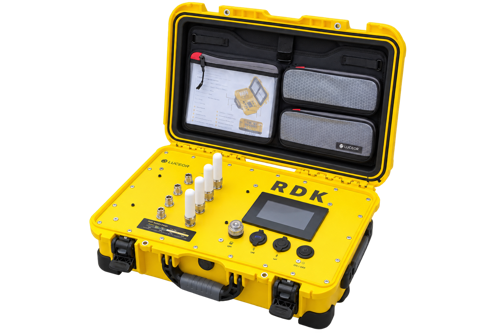
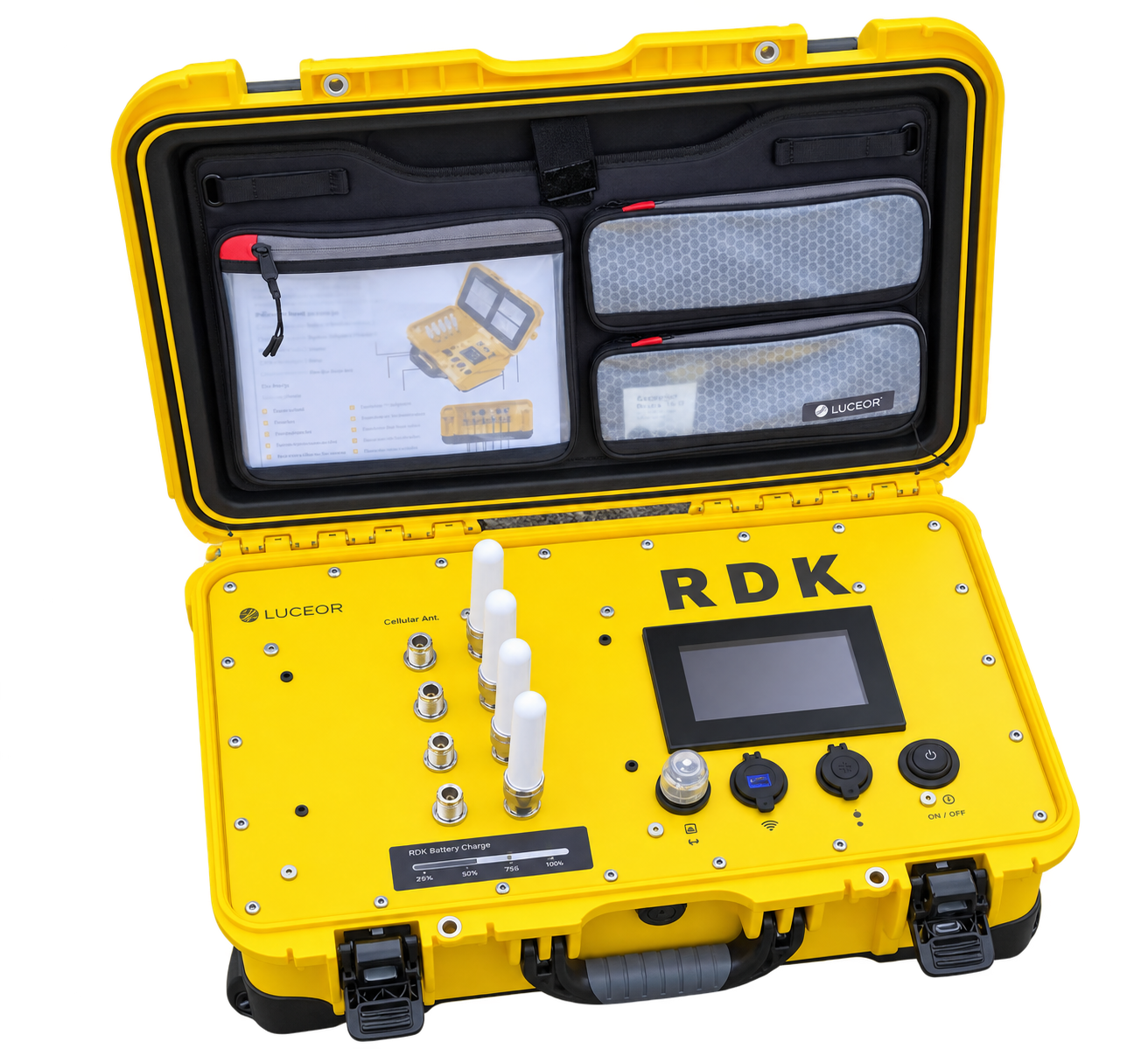
| Local supervision | 5-inch capacitive touchscreen |
| Form factor | Portable hard case with integrated battery and power management |
Radio & access
| Cellular radio | 1× 5G cellular radio · Four antenna ports |
|---|---|
| Local WiFi radios | 2× WiFi 6 access-point radios · Four RF ports per radio |
| WiFi bands | 2.4 GHz and 5 GHz |
| Simultaneous users¹ | Up to 255, as specified for the WiFi platform |
| External data input | 2.5 Gbps Ethernet |
HyMesh
| Hybrid connectivity | Starlink Standard satellite + 5G cellular + WiMesh |
|---|---|
| Failover | Integrated HyMesh management of switching between available uplinks |
| Bandwidth aggregation | Optional aggregation of 5G and Starlink bandwidth |
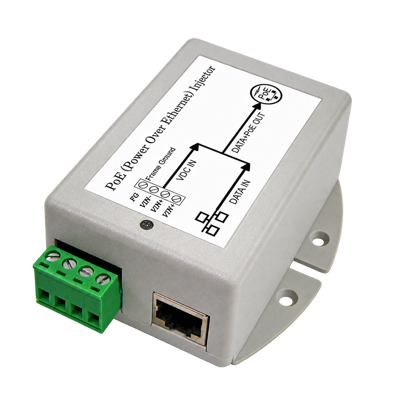
| Starlink integration | Designed for the external Starlink Standard antenna, connected and powered through the dedicated Gigabit PoE interface |
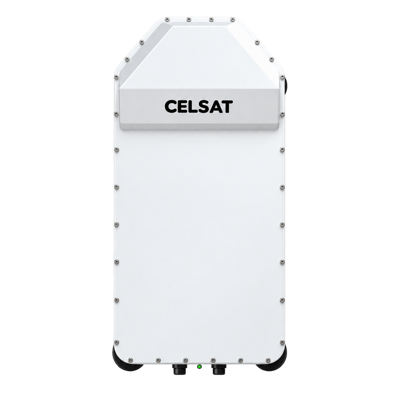
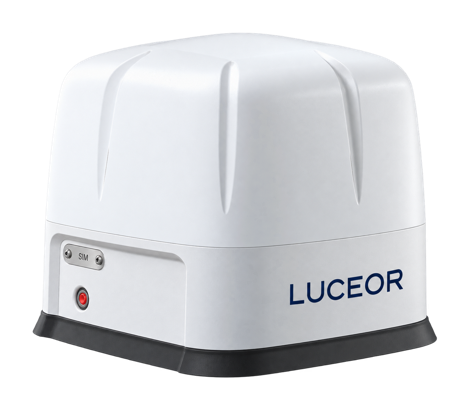
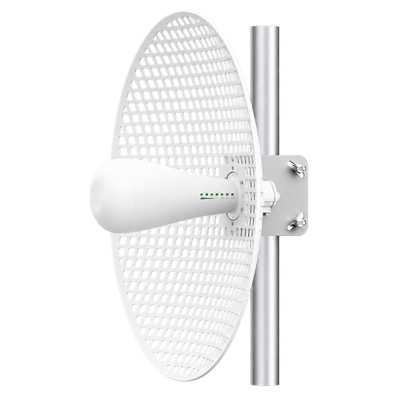
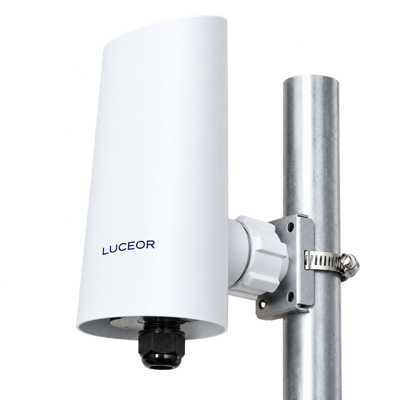
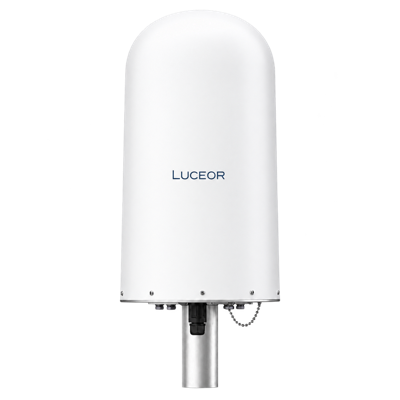
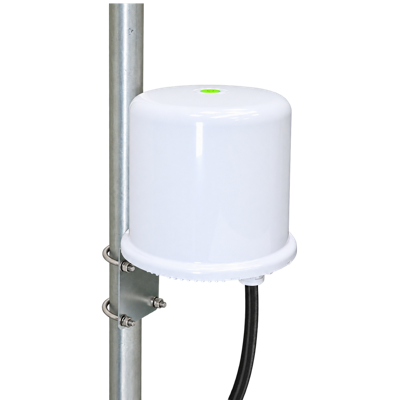
| WiMesh integration | External LUCEOR WiMesh terminal through the dedicated Gigabit PoE interface |
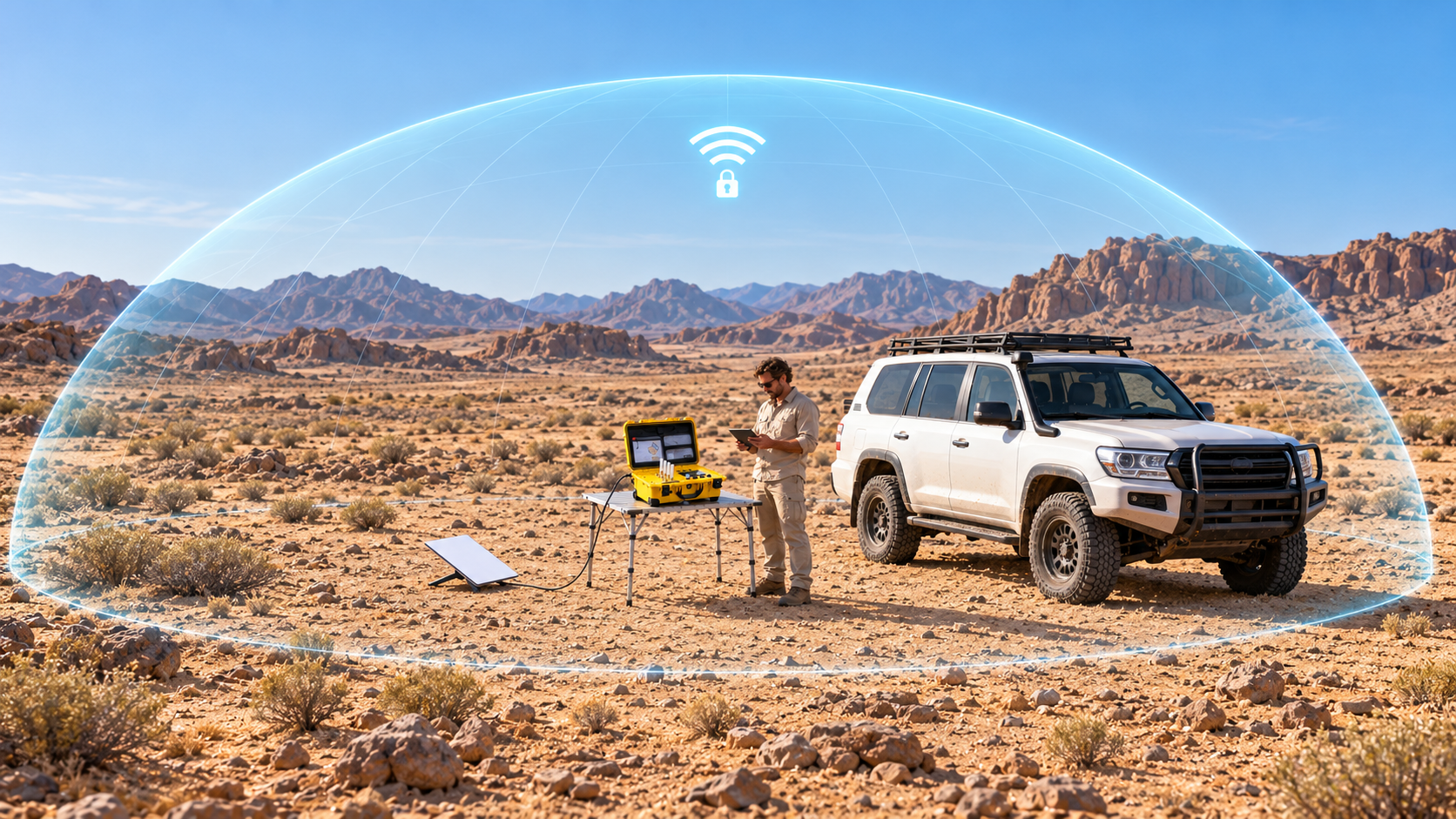
| Local service | Secure WiFi bubble for nearby authorized users and devices |
| Deployment conditions | Configure available uplinks and local access security for the mission |
Interfaces & power
| Starlink PoE interface | Gigabit Ethernet · 9–36 V DC to PoE · Up to 150 W |
|---|---|
| Starlink surge / ESD protection | ±8 kV / ±15 kV |
| Starlink terminal compatibility² | Starlink Standard antenna with the appropriate connection cable |
| WiMesh PoE interface | Gigabit Ethernet · 48 V DC passive PoE |
| WiMesh equipment | LUCEOR WiMesh terminals, including MESH360; confirm the selected terminal configuration |
| Solar input voltage | Up to 75 V |
| Maximum charging current | 15 A |
| Stabilized output voltage | 24 V |
| Charge optimization | Dynamic maximum-power-point optimization |
Battery
| Battery chemistry | Lithium-ion |
|---|---|
| Nominal battery voltage | 12 V |
| Maximum discharge current | 50 A |
| Battery energy capacity³ | 12 V · 100 Ah 1.2 kWh nominal |
| Battery operating temperature⁴ | -20 to +60 °C |
| Battery weight⁴ | 5.6 kg |
| Battery certifications⁴ | UN38.3, CE, RoHS and UL listed in the supplied battery specification |
| Monitoring | Real-time battery status monitoring |
| Controller communication | RS485 |
| Protection | Overvoltage, deep discharge and overheating protection |
Touchscreen
| Screen | 5-inch capacitive TFT LCD touchscreen |
|---|---|
| Resolution | 800 × 480 pixels |
| Status display | Battery level, network status and number of connected users |
Ordering
| Product name | RDK |
|---|---|
| Model | RDK-E4-2E35-25-5G |
| Package contents | Available on request |
1. The source sheet specifies 255 simultaneous WiFi users. This is a platform capacity figure; usable capacity depends on traffic, radio conditions and configuration. Ethernet rates and PoE ratings are interface values, not end-to-end internet throughput.
2. RDK is designed for the external Starlink Standard antenna with the appropriate connection cable. Satellite and cellular services depend on subscriptions and availability.
3. Battery rating: 12 V / 100 Ah, as confirmed for this model. Nominal energy is 1.2 kWh (12 V × 100 Ah). Runtime depends on load, usable battery capacity and operating conditions.
4. Battery temperature, mass and source-listed certifications apply to the battery module only. They do not establish the operating range, total weight or certification of the complete RDK kit.
5. Accessories shown are configuration options. Package contents are available on request. The illustrated WiFi bubble is conceptual and does not specify a coverage radius.
PACKAGE CONTENTS
In the Box
Package contents available on request.
RDK / HYMESH®
Configure your field kit.
Contact LUCEOR to confirm the terminals, antennas, power accessories and documentation for your deployment.
PRODUCT PHOTOGRAPHY
RDK, from every angle.
Four case views and one real-world field setup.
Open case · Front view
Download PNG ↓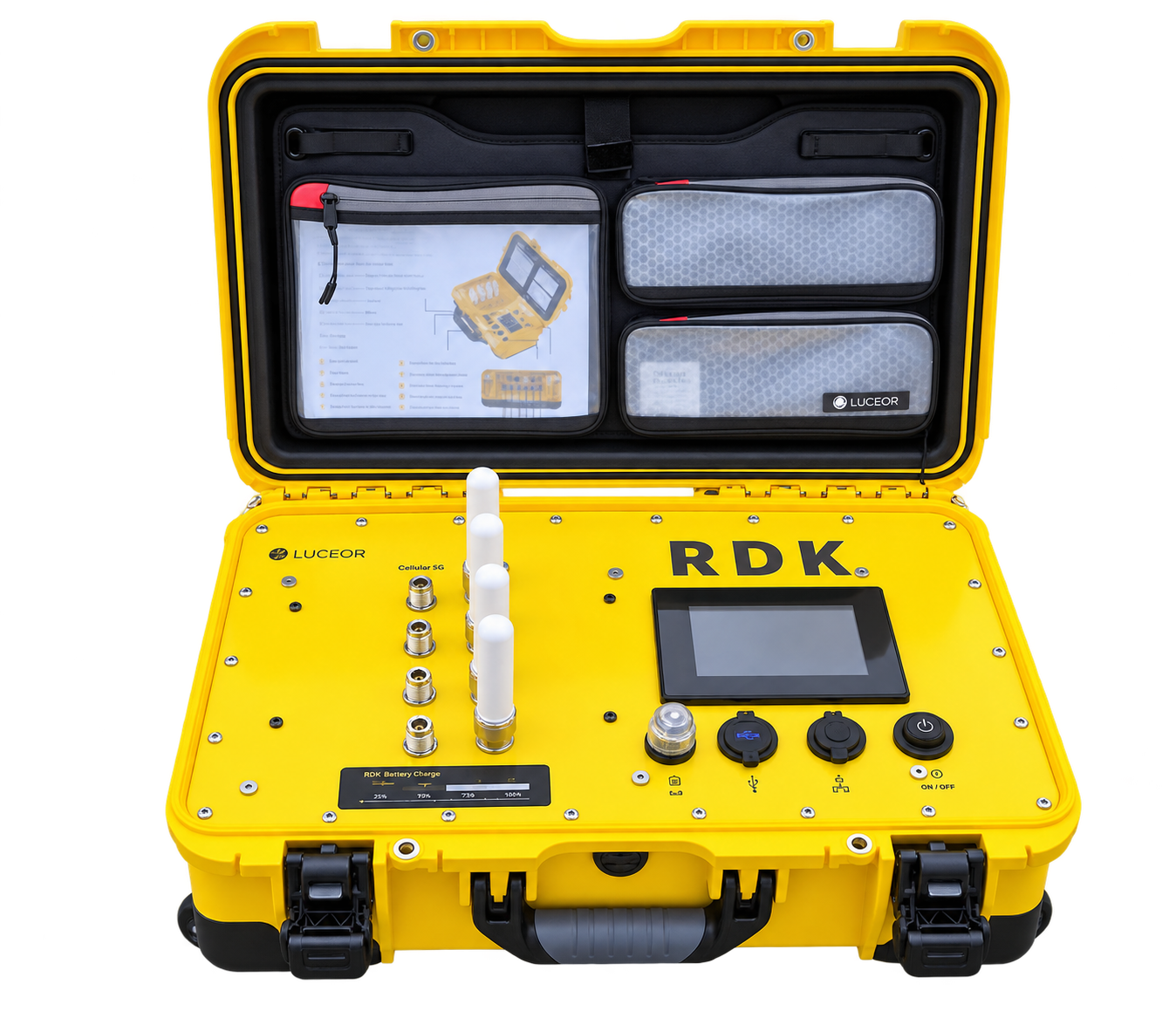
Rear connections
Download PNG ↓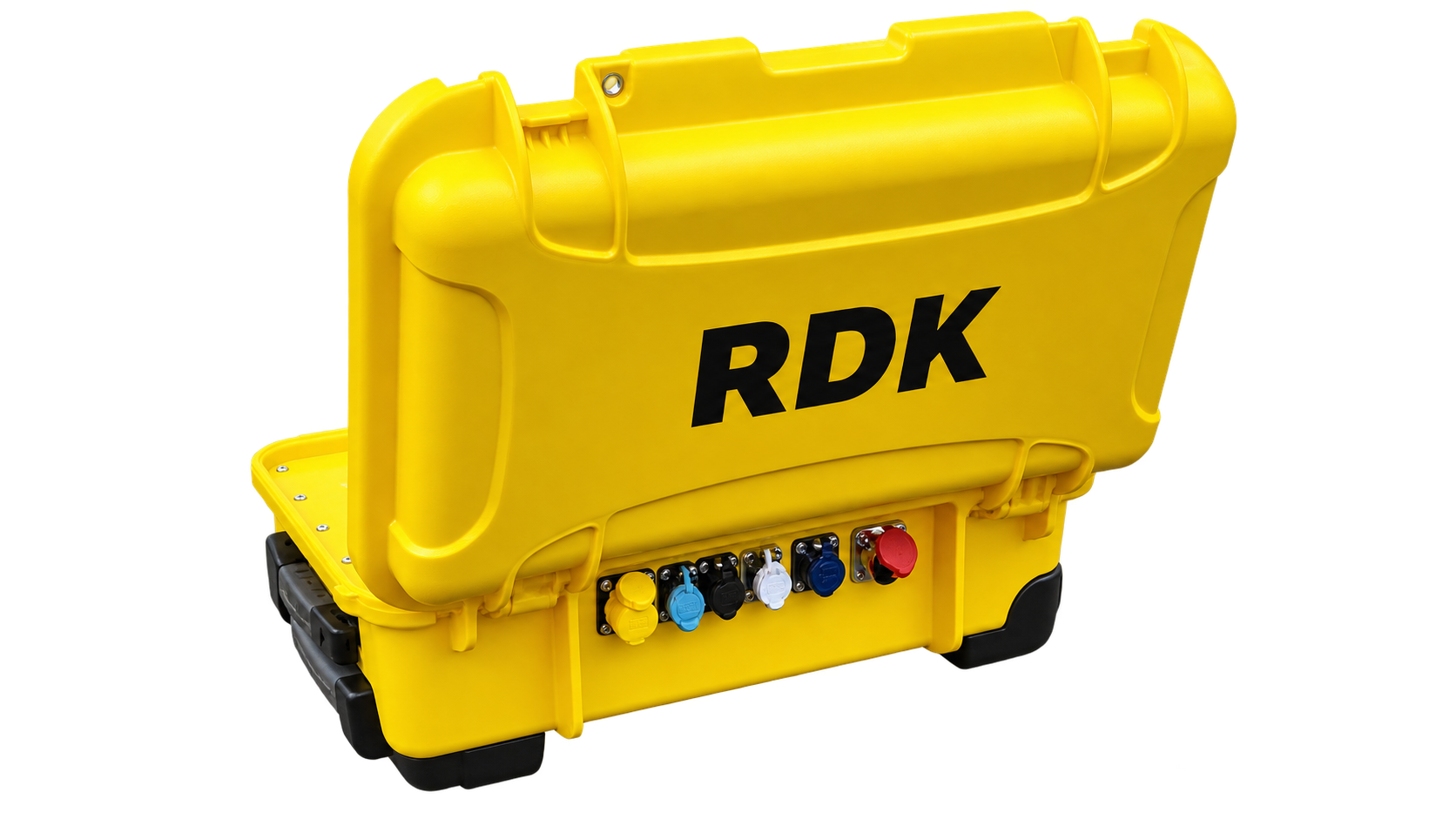
Closed case
Download PNG ↓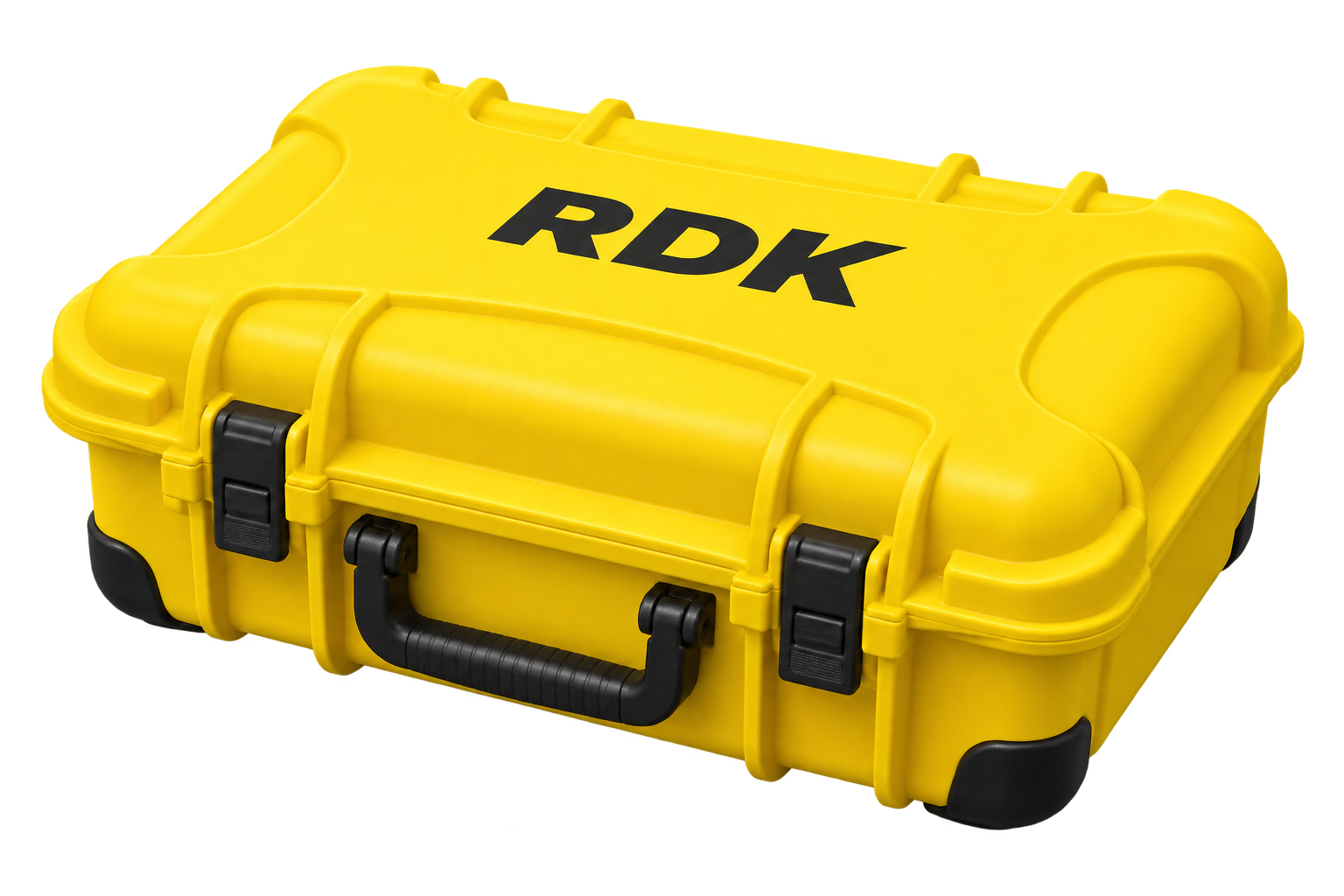
RDK + Starlink · Field setup
Download JPG ↓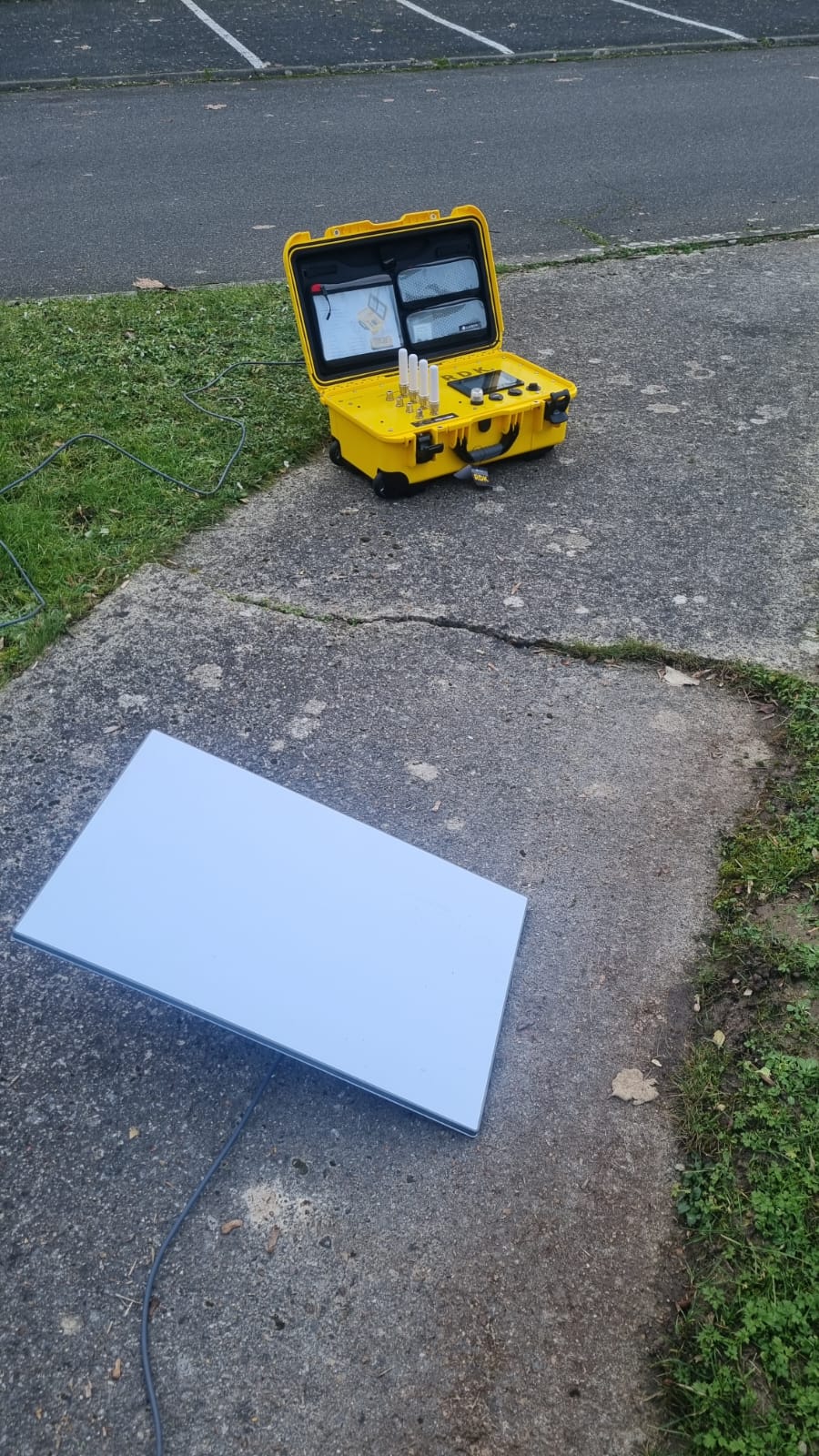
DEPLOYMENT OPTIONS
Complete your field kit.
Confirm the selected configuration with LUCEOR. Package contents available on request.
PRODUCT DOCUMENTATION
Installation Guide
Installation documentation available on request.
RDK / HYMESH®
Configure your field kit.
Contact LUCEOR to confirm the terminals, antennas, power accessories and documentation for your deployment.